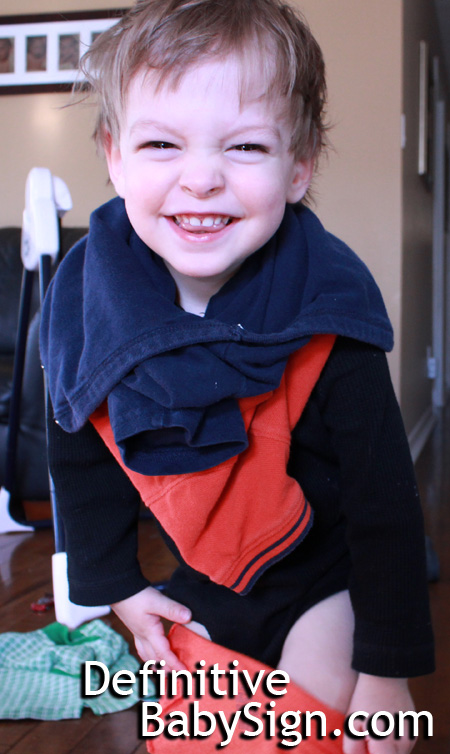
When my son was just shy of 2-years we began taking him out with us to restaurants – everywhere really. Without sounding conceited (I’m just illustrating a point you will see), we were complimented on our son’s behaviour. If fact, it came to the point where we wondered if our son was really that unique. Were other kids that much more misbehaved because what we really saw was a son who was – to us – normal. We didn’t think he was a super-human boy, but apparently others did.
 I can recall several times when my wife had our son out and others said that it was “nice to see babies out at restaurants, how unique it was.” I guess most families put their lives on hold once they have a baby and think they can’t do anything anymore. I’m guessing things are pretty overwhelming and rather than just carry on with things, cancel events in their lives just to cope. I can safely say we’ve done both, however. Life is certainly not easier once you’ve got a little guy to take care of, and I can only imagine what it’s like to have more than one, but I still think we should carry on with our lives despite having additional responsibilities.
I noticed one family with a daughter enjoying dinner one row over and across from us at a fairly fancy restaurant. They seemed to be enjoying my son as they gestured over. At that moment, I didn’t think much of it, but after dinner they made a point to offer us a compliment. “We’ve been watching and noticed what a well behaved boy you have – so refreshing.” From this we had our son say THANK YOU, the best way he could – with a sign. We then asked about their dessert and their well spoken daughter replied that they made it extra special with the kids menu by adding dry ice. She was about 8-10 years old and obviously was well ahead of other children her age. Obviously we, and her parents had something in common.
From their reaction to Holden’s THANK YOU sign, they likely never realized that we had been using signs to communicate with him coupled with his limited vocabulary to keep him an active part of our table. Along with some crayons and a small toy car, it was all he needed to feel like part of an adult table. Courtney’s brother and cousin were also with us so fitting everything in and keeping a toddler happy is a bit more of a chore. Being attentive is, in my opinion, what’s necessary to keep a toddler happy. It’s a constant connectivity that maintains a child’s spirits. That is until they develop other interests and capabilities.
This is really what I think is the root of a child’s tantrums – the dependency and lack of ability of a child to suit their own needs and interests. Having to depend on others is difficult for all people to cope with. It’s one of the most common complaints amongst seniors, who as they age, must progressively depend on help and care. Can you imagine wanting something, but having it slightly out of reach, then having to ask someone else for help, and them refusing. Imagine this happening frequently throughout the day and sometimes for no discernable logical reason whatsoever.
Yes, parents do usually have good reason to say no, but that doesn’t make it any easier on a toddler. Other times parents might get upset and emotional and deny a toddler request out of frustration. This can only produce similar results from a child as they will simply imitate those around them.
Then we find that tantrums subside as a child ages – rightfully I say. It’s not that a child “grows out of tantrums”, it’s that they are able to do more things for themselves as it suits them. Thus, instead of requesting, a child simply does it for themselves. Having attentive parents is the key to producing well adjusted children capable of passing on the empathy they’ve experienced. A recent study suggested this very thing. Kids of parents who, some might say “coddled” them, tended to pass the care they receive to others later in life. While nothing conclusive can be said either way, it does provide interesting fodder for debate and something parents might keep in mind as they develop their own strategies for raising children.
So how do signs play into this entire affair? Signs are what parents use to communicate in a two way fashion with their baby – starting very early. If a parent waits until a child is fully verbal, many bad habits might form. Communication allows a parent to clearly understand the needs and wants of a baby much sooner than waiting for spoken language. Signs allow a parent to understand a baby’s interests too. This helps parents share experiences with a baby which they have interests in – not just what the parent is interested in. I can say with certainty that my relationship with my son would be far less rich without signs, than with signs. As a father, I think signs are a necessity to connect with a pre-verbal baby. While mothers can rely on closeness and intuition, men need to see and hear things directly. Baby sign shows fathers explicitly what a baby wants and needs. I tell dads that there’s a real person behind those big bright eyes.
 While we recommend teaching your baby certain signs at the beginning of your signing journey, as your signing repertoire grows, you will teach your baby the signs that most interest him or best describe the world as he sees it. The first signs are detailed in our Fast Track to Signing Program. From there, you can use our Baby Sign Dictionary to learn all the signs you might need to teach your baby.